Image via Wikipedia
Running an online business can have a variety of hidden legal dangers. When you decide to create a website and open an online business, you are setting shop to the world. Your customers can be anywhere.
Recently, one of my clients opened a vintage jewelry shop online. Her office is based in Manhattan. A customer residing in California purchased an antique engagement ring from her site. The customer claimed that the ring was not authentic and started a lawsuit in California. Does the California court have lawsuit jurisdiction of the case?
There is no foolproof way of avoiding being subject to the jurisdiction of a foreign court in a lawsuit. However, there a number of ways that you can minimize the risk of being sued in another state:
- Draft a Terms of Use and Privacy Agreement. On your website, you need two agreements, a Terms of Use and Privacy Agreement. You need to have two clauses drafted within these agreements: a forum selection and a choice of law. I drafted a forum selection clause for my client stating that jurisdiction is in the County of New York, State of New York. The choice of law was New York.
- Draft a specific contract with each customer. If possible, draft a contract tailored to the services provided for each customer. When negotiating, you may be able to also obtain pertinent information about the customer, such as if they have an office in New York State. If your customer provides a contract to you, make sure that you review the forum selection clause and choice of law.
- Be aware of where you do business. If you do significant business in another state, the court in foreign jurisdiction may rule that you have enough minimum contacts so that you can be subject to a lawsuit in that state.
- Choose a Country. On your website, you should have users pick a country where they reside. If they reside in a country that you may suspect fraud and are unaware of the court system, such as Nigeria, simply do no allow customers to purchase your goods or services from there.
The Law Office of Frederic R. Abramson represents online businesses in New York. If you have a question regarding lawsuit jurisdiction in New York, call me at 212-233-0666.
Image via Wikipedia
How can I set internal rules within my company to help resolve disputes in the future? The answer is your next step in forming your corporation or start-up. After creating your articles of incorporation, you must now create bylaws. Bylaws are contained within a single written document and dictate the operating standards and procedures of your business entity. They are your way to set internal guidelines and procedures for your new company.
The standards set out in your bylaws will follow through the life of your business entity determining what it can do. You are not required to file bylaws with the Secretary of State in New York, but you must keep a copy of them at your principal place of business. Typical bylaws will contain the following:
- Documenting your identifying information, such as: the name of your organization and where your office(s) are located
- The number of corporate officers and directors: you should include the members of your organization including your board of directors and the range or specific number of those directors.
- The election of your board of directors and how they will function.
- Committees: the specific roles of any special committees including formation, how their appointed, and their duties.
- The shares and stock classes that the corporation can issue.
- Information concerning director and shareholder meeting protocol, the extent to the liability arising out of the performance of their duties, conflicts of interest, and corporate record keeping.
- Specific procedure in amending bylaws and articles of incorporation.
Bylaws cover far more specific topics than the Articles of Incorporation including the corporation’s organization and structure. They are what give your company direction. What difficulties are you finding when creating your LLC’s or corporation’s bylaws?
The Law Office of Frederic R. Abramson represents start-ups in New York. If you have any questions regarding bylaws feel free to contact our office at 212-233-0666

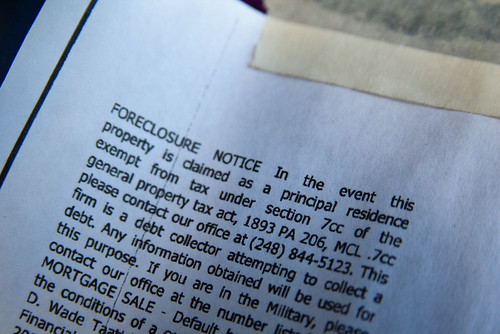
News that mortgage service providers failed to accurately document the seizure and sale of tens of thousands of homes have caused a public outcry. Robo-signers verified the truth of foreclosure documents without even reading them. This issue is serious because some homeowners are being denied their due process rights governing private property. Imagine a bank, incorrectly tried to foreclose on your property. Insane! Some lenders, such as JP Morgan Chase temporarily halted foreclosures to review paperwork.
In an effort to combat this potential huge problem, the New York Law Journal reports that the New York State court system yesterday directed lawyers for lenders to file an affirmation that they have taken reasonable steps to verify the accuracy of papers they file to support residential foreclosures. Here is a copy of the suggested attorney affirmation.
Plaintiff’s attorneys now must verify:
(a) they have personally reviewed plaintiff’s (banks) documents and records relating to this case;
(b) has reviewed the Summons and Complaint, and all other papers filed in this matter in support of foreclosure; and
(c) has confirmed both the factual accuracy of these court filings and the accuracy of the notarizations contained therein. This portion is an effort to combat “robo-signers.”
New York Lawyers are already under an obligation to certify that the documents are accurate. Somehow, the court hopes that this extra verification will hold lawyers extra accountable.
I doubt that this will do anything to halt the tide of foreclosures based on messy paperwork. For example, I don’t believe that a judge will sanction a lawyer based on paperwork that an attorney handles on a per diem basis. These lawyers only know about the case the day of the court appearance and are only trying to make a buck. It is up to the client to provide the proper paperwork. It is the client, not the lawyer, who should be held accountable.
What do you think of the new foreclosure verification affirmation? Do you think it will help stop foreclosures based on shoddy paperwork?
If you have a question regarding foreclosures in New York, contact me at the Law Office of Frederic R. Abramson at 212-233-0666.

You probably spend much of your time at work in front of a computer. When you are on the run, you use your Blackberry or iPhone for both work and pleasure. But who owns the data that is created, viewed and stored while working?
If you work in New York for a private company, you have a reasonable expectation of privacy for your electronic devices, work computers and cellphones. This is especially the case when the company that you work for does not have a policy regarding internet usage. As a result, I have been advising companies to cover their bases by clearly and specifically drafting internet usage policies that explains their employees expectation of privacy.
Restrictive internet usage policies usually include the following:
- All the data that is stored on work computers is company property;
- Employee’s have no expectation of privacy;
- The Employer may monitor its employees computer usage without their knowledge.
The law regarding restrictive internet usage policies have been looked at with increasing scrutiny by the courts. For example, a recent court ruling did not allow an employer to access the Hotmail account of its employee.
Despite a written internet usage policy, employers are not immune from potential lawsuits from employees. Listed below are restrictions that employers should be aware of:
- PRIVILEGED DISCUSSIONS. Discussions regarding attorney-client communications may continue to be privileged. If an employee is using the internet for legally permitted employee, like union organizing her communications may be privileged.
- DISCRIMINATION. Be aware that you cannot treat your employees differently while monitoring their computer usage.
- ACCESSING PRIVATE ACCOUNTS. You cannot access your employee’s Twitter account simply because they accessed their account at work.
- NEW YORK STATE LAW. Believe it or not, New York State does not have an invasion of privacy law. Be aware that you cannot fire an employee simply because she tweets.
Be aware that case law is changing on this subject. As a word of caution, use your common sense and think about the golden rule.
For more reading: Who Owns all the data in the Workplace
If you have any questions about who owns your data at work, contact me at the Law Office of Frederic R. Abramson at 212-233-0666.

This post has nothing to do with the law. It’s about art. I am not talking about art in the traditional sense, like Jackson Pollack or Pablo Picasso. I am talking about the art that you bring to your work and to your life.
In our economy, you are no longer guaranteed lifetime employment. The publishing industry is in upheaval. GM is running on fumes. The insurance company that you work for could be bought out tomorrow. Just because you have depth of knowledge doesn’t mean that your job is secure. It doesn’t matter if you own your own company or you are an employee. The only way to get your worth is to stand out. You need to be seen as indispensable and to produce interactions that people care about. Seth Godin says that you need to be what he calls a “Linchpin.” (Read his thought provoking book). Now, success means being an artist.
To quote Seth Godin:
“Be remarkable. Be generous. Create art. Make judgment calls. Connect people and ideas … and we have no choice but to reward you.”
Every morning after dropping off my kids at daycare, I work to be a remarkable attorney. I am generous with my time. My art is providing legal services that are tailored to you. I write articles nearly every day working to educate you. You are paying me for my knowledge of the law and my intellectual ability to make judgment calls for you. My goal is to connect you with the rest of my tribe. Hiring a lawyer should be a unique experience for you and I work to make your life better.
I understand that you have a variety of options when choosing an attorney. You may decide that you may want to hire a lawyer that costs less money. You may think that I don’t handle an area of law, like real estate and don’t bother calling me (yes I do handle real estate closings). That’s all ok. I’m here to let you know that you know that I am here for you and for all of your legal needs. No, I don’t handle every area of the law, but I probably know a lawyer who can help.
Let me know what you think about Seth Godin’s words and continue to do good work.
The Law Office of Frederic R. Abramson practices the art of law in New York State. You may contact me at 212-233-0666